
Removing a tree from your property is a substantial undertaking. Proper planning and safety protocols are critical to ensure both personal safety and the protection of nearby structures. Whether you plan to manage a small tree on your own or need to address a large, hazardous tree, understanding safe practices is crucial. For those in need of assistance or expert advice, consider contacting professional tree trimming and removal in Utah to handle challenging or dangerous work efficiently. This guide is designed for homeowners who want to understand the safest ways to remove trees. It covers everything from initial assessment to debris disposal, so you can proceed with confidence or know when to call in the professionals.
Assessing the Tree and Surroundings
Every safe tree removal operation begins with a thorough assessment. Start by examining the tree for warning signs such as dead limbs, fungal growth, visible cracks, or signs of disease. Evaluate the tree’s lean and the direction it would naturally fall. Precaution is especially important when the tree is near homes, fences, sheds, or utility lines, as removing such trees is more complicated and introduces additional risks. Furthermore, inspect the ground conditions around the tree. Wet, uneven, or unstable soil can affect both the felling process and workers’ footing. These site factors should be understood fully before proceeding. If power lines or municipal roads are nearby, contact your local utility provider or city maintenance department for guidance.
Establishing a Safe Work Zone
Once an initial assessment is complete, create a clearly marked work zone. The perimeter should extend at least twice the tree’s height in all directions. Mark this area with caution tape or visible barriers, and ensure neighbors, children, and pets stay clear while work is ongoing. Clear nearby objects that could obstruct movement or cause tripping hazards, and ensure an unobstructed escape path is available if the tree falls unexpectedly.
Utilizing Proper Equipment and Protective Gear
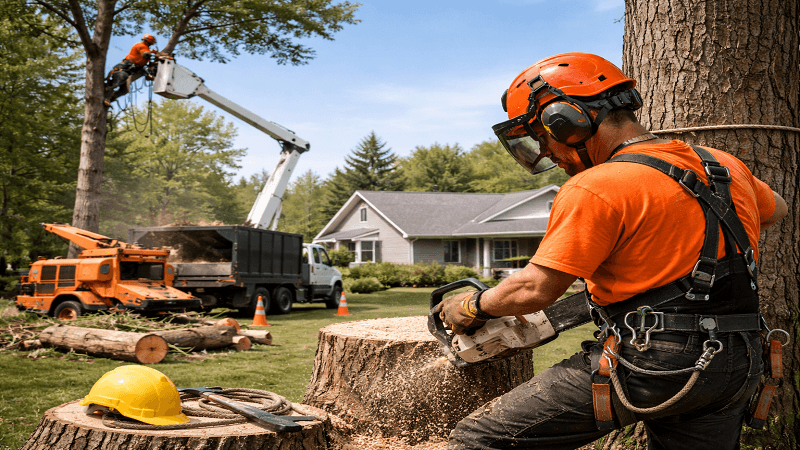
Personal safety equipment is non-negotiable in tree removal work. Essential gear includes a hard hat, heavy-duty work gloves, safety goggles or face shields, chainsaw chaps, and boots with steel toes or strong tread. A well-maintained chainsaw appropriate for the tree’s size is a must, and it should be checked for full functionality before starting the job. Keep a first aid kit nearby and instruct anyone assisting you on emergency response procedures.
Understanding Cutting Techniques
Felling a tree successfully often depends on using precise cutting techniques. The standard method is to create a notch on the side of the tree facing the intended fall direction. This “face cut” is typically about one-third of the way through the trunk. The back cut, made just above or behind the notch on the opposite side, releases the tree so it falls safely. Always step back quickly along your designated escape path as the tree begins to move.
Recognizing When to Hire Professionals
There are clear situations where homeowners should step back and call certified arborists. Trees that lean dangerously, are close to power lines, or show signs of advanced rot can fall unpredictably and cause severe injury or property damage. Local ordinances or state regulations might require professionals for certain types of removal; for example, the North Carolina Department of Labor specifies that trained line-clearance workers must perform any tree work within 10 feet of a utility line.
Disposing of Tree Debris Responsibly
After cutting down the tree, responsible disposal of debris is important. Many municipalities offer curbside pickup for branches and trunks, while some recycling centers accept clean wood chips for compost or mulch. Chipping branches and smaller limbs is environmentally sound, as is stacking larger wood for firewood if it is permitted locally. Burning debris is discouraged in many states due to air quality concerns and wildfire risks. According to the EPA, burning yard debris can also introduce harmful pollutants into the atmosphere.
Preventing Future Hazards
Healthy landscape maintenance can reduce the need for future removals. Regular pruning of dead or weak limbs, monitoring for invasive pests, and ensuring trees are not overcrowded help trees thrive. Homeowners should inspect their trees after major storms, as wind and ice can cause lingering structural damage that may not be immediately visible from the ground. Prompt attention to compromised branches can often prevent the need for total tree removal later.
Conclusion
Tree removal, while sometimes essential, is an operation best approached with caution and respect for both personal safety and environmental responsibility. By prioritizing careful assessment, the right protective equipment, and safe cutting procedures, you can reduce the risk of harm. In cases involving special hazards or large trees, seeking out a trusted professional ensures a safer outcome for your property and loved ones.