
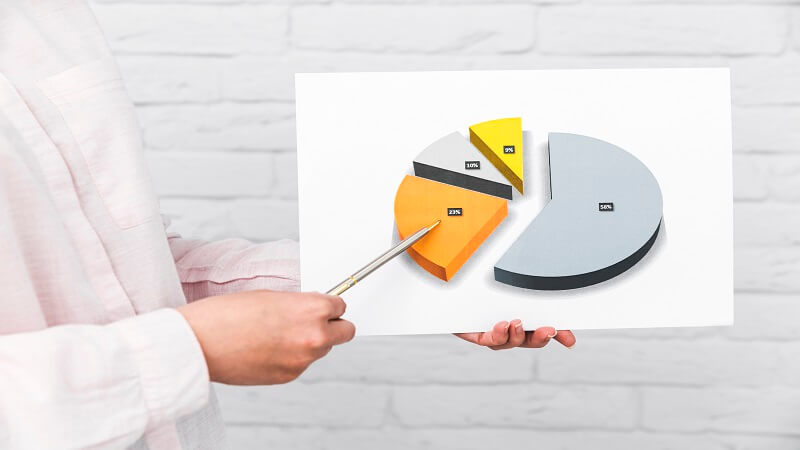
Data is everywhere, but understanding it is still a challenge. Spreadsheets filled with numbers can overwhelm even experienced professionals, and long reports often bury the most important insights. This is where visual tools step in—and few are as effective or timeless as the pie chart.
Pie charts have survived decades of changing design trends for one simple reason: they work. When the goal is to show how parts relate to a whole, nothing communicates faster or more intuitively.
Today, tools like pie chart maker make it possible for anyone to create polished, presentation-ready charts in minutes, without technical or design expertise.
Why the Human Brain Loves Pie Charts
The human brain processes visuals far faster than text or numbers. When we see a circle divided into segments, we instantly understand proportion. We don’t need to calculate percentages or compare rows—we just see the difference.
That’s why pie charts are so effective in meetings and presentations. They eliminate friction between data and understanding. Instead of asking your audience to analyze, you allow them to recognize patterns instantly.
When Pie Charts Are the Right Choice
Pie charts shine when the data tells a “parts of a whole” story. They are ideal when:
- The total equals 100%
- Categories are limited in number
- Comparison is more important than precision
- The message needs to be absorbed quickly
Common real-world examples include budget allocation, market share, survey results, time distribution, and demographic breakdowns. In these cases, pie charts offer clarity without distraction.
Simplicity Is a Feature, Not a Limitation
One reason pie charts sometimes get criticized is misuse. Overloaded charts with too many slices or poor labeling can become confusing. But when designed thoughtfully, simplicity becomes their greatest strength.
A clean pie chart focuses attention on what matters. It removes unnecessary detail and highlights relative importance. This makes it especially useful for executives, clients, students, and non-technical audiences.
Design Principles That Make Pie Charts Effective
A strong pie chart follows a few key principles:
- Limit slices to the most meaningful categories
- Use distinct, readable colors
- Label clearly and avoid clutter
- Keep the chart focused on a single message
These choices don’t just improve aesthetics—they improve comprehension. A viewer should understand the chart in seconds, not minutes.
Pie Charts in Business and Marketing
In business environments, time is limited and decisions are costly. Pie charts help leaders quickly understand how resources are distributed, where spending goes, or which segments dominate performance.
In marketing, they’re often used to visualize audience demographics, campaign results, or channel contributions. When shared in reports or presentations, they help teams align around insights rather than debate numbers.
Educational and Academic Value
Pie charts are also powerful learning tools. In education, they help students visualize ratios, percentages, and probability concepts. Instead of abstract numbers, learners see relationships clearly.
This visual reinforcement improves retention and understanding, making pie charts especially valuable in teaching environments.
Transparency Builds Trust
Another overlooked benefit of pie charts is transparency. When information is visualized clearly, it builds trust. Stakeholders can immediately see where money, time, or effort is going.
This is particularly important for nonprofits, public institutions, and organizations that need to communicate accountability. A clear chart can say more than paragraphs of explanation.
From Data to Storytelling
The best charts don’t just display data—they tell a story. A pie chart can highlight imbalance, opportunity, or success depending on how it’s framed.
Before creating a chart, it helps to ask: What do I want the viewer to understand or decide? When charts are built with intention, they become tools for action rather than decoration.
Speed Matters in Modern Workflows
Modern teams need speed. Waiting hours—or days—for visuals slows momentum. Easy-to-use chart tools allow users to focus on insights rather than execution.
This democratization of design empowers individuals across roles—students, freelancers, managers, entrepreneurs—to communicate visually without relying on specialists.
Final Thoughts
Pie charts endure because they respect the viewer’s time. They simplify complexity, highlight meaning, and turn raw data into immediate understanding.
When clarity matters and decisions depend on insight, a well-crafted pie chart isn’t just helpful—it’s essential.